BUYING & FINANCE
The 5 Things Nobody Tells You Before Buying Your First Property in Japan
From repair fund traps to inheritance surprises, a Tokyo-based insider shares the five things that blindside first-time foreign buyers in Japan.
On this page 10
- Why Is the Repair Fund Balance the First Number You Should Check?
- What Does the 1981 Earthquake Standard Actually Mean for Your Purchase?
- How Does Japanese Inheritance Law Affect Foreign Property Owners?
- What Does “English-Speaking Property Manager” Actually Mean?
- What the Real Numbers Look Like in Year One
- The Tax Setup Nobody Tells You to Do Before Day One
- Why Do Condos Depreciate Differently in Japan Than Back Home?
- The Exit That Nobody Plans For
- Where This Goes Wrong
- FAQ
TL;DR: Japan’s property market is foreigner-friendly at the legal level but has structural quirks that genuinely surprise first-time buyers. Repair fund deficits, pre-1981 earthquake standards, Japanese inheritance law for overseas heirs, the reality of property manager English capabilities, and the age-value relationship in condos are the five areas where preparation directly saves money. This issue also covers what the numbers actually look like in year one, the tax setup nobody tells you to do before day one, and the exit almost nobody plans for.
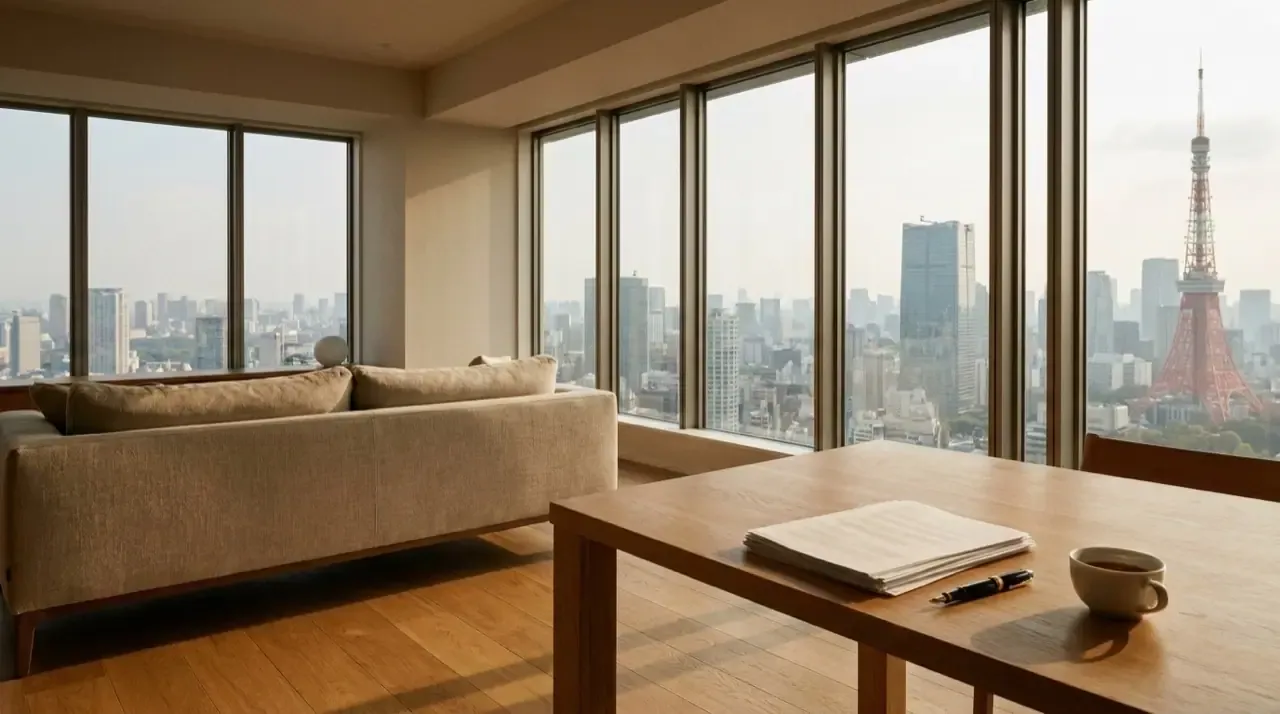
A client — sharp, done deals in London and Sydney — closed on a Shibuya 2LDK last year. Three months later: “Why did no one mention the building had a ¥4.5M repair fund deficit?”
It was in the disclosure documents. He’d received them. He just didn’t know what to look for. The gap between knowing a number and understanding what it implies — that’s the gap this letter closes.
Why Is the Repair Fund Balance the First Number You Should Check?
Every condominium in Japan has two types of monthly fees: a management fee and a repair reserve fund. The repair reserve fund accumulates over years to cover major works — exterior waterproofing, elevator overhauls, plumbing, structural repairs. In a healthy building, the reserve balance matches or exceeds the long-term repair plan requirements at each stage.
Many buildings, it’s not.
Japan has a known structural problem with repair fund underfunding. Monthly contributions were set low in the early years to attract buyers and never revised upward fast enough; the shortfall compounds; by the time the building hits 25–30 years, the reserve is inadequate for the actual maintenance required. In older Tokyo buildings, I’ve seen reserves sitting at around 30–40% of what the long-term repair plan actually requires.
For me, the realization hit the day I received the first repair reserve fund statement for a Nakameguro apartment I’d bought six months earlier. Reserve balance: ¥800,000 for a 40-unit building that was 23 years old. Around ¥20,000 per unit. For context: replacing an elevator in a building that size runs roughly ¥8–12M. The long-term repair plan projected an assessment call in three years. I’d read the balance figure. I hadn’t understood what it meant.
When the fund runs short, the owners’ association has two options: raise monthly contributions (which lowers the net yield of your investment) or levy a special assessment — sometimes both. Special assessments of ¥500,000–¥3,000,000 per unit are not unusual in older buildings facing major repair cycles. You own a unit, you pay. No opting out.
The Important Matters statement — the mandatory disclosure document — will show the current balance, monthly contribution amount, and whether a special assessment has been levied recently. Read it. Before you buy a condominium, you can and should request:
- The current repair reserve balance
- The long-term repair plan
- The current monthly repair reserve levy per unit
Compare the accumulation trajectory against what the repair plan actually costs. Ask your licensed agent to explain the long-term repair plan; if neither your agent nor a bilingual licensed real estate agent brings it up, ask explicitly. A building with ¥200M in reserve and ¥300M in planned works over the next decade is a different investment than one with ¥400M in reserve for the same plan.
A low reserve isn’t automatically disqualifying — some buildings have just completed a major repair cycle. It should be priced into your offer and your budget.
From the desk — Across the closings I have handled, the disclosure documents almost always contained the bad news, the buyer just did not know which line to read. The reserve fund balance and the long-term repair plan are where I see first-timers lose the most money after the fact, because a healthy-looking building can be quietly carrying a deficit that turns into a special assessment a year after you hold title. The owners who avoid a nasty special assessment in years three to five are the ones who insisted on reading the long-term repair plan against the reserve trajectory, not just the single balance figure on the disclosure sheet.
Related reading: Real Estate Agent Commission in Japan: What Buyers Actually Pay.
Related reading: From a Two-Week Trip to a Title Deed: How Visiting Japan Turns Into Buying.
What Does the 1981 Earthquake Standard Actually Mean for Your Purchase?
Japan revised its Building Standards Law in 1981 to require higher seismic resistance in new construction. Buildings constructed under the pre-1981 standard are legally usable and widely inhabited. The risk profile is genuinely different.
The 1995 Kobe earthquake caused disproportionate damage to pre-1981 structures. Documented, not disputed. The 2011 Tohoku earthquake added further data points.
For foreign buyers, the practical implications:
Pre-1981 buildings often trade at a discount — sometimes a meaningful one in central wards. If you’re buying for price per square meter in areas like Minato or Chiyoda, you may be looking at some older stock. Know what you’re getting.
Post-1981 buildings meet the standard designed to prevent collapse in a major earthquake. Post-2000 buildings meet an even higher standard for timber-frame construction specifically.
For a newer apartment in a building completed 2000 or later: generally lower seismic concern. For a 1970s building near a river in Edogawa ward: different conversation.
This matters for insurance, for eventual resale, and for your own peace of mind. Don’t avoid older buildings categorically. Price the risk correctly.
How Does Japanese Inheritance Law Affect Foreign Property Owners?
This one surprises almost every first-time foreign buyer. Most don’t find out until they’ve already purchased.
If you own Japanese real estate and you die, the property goes through Japanese estate proceedings — regardless of where you were domiciled, regardless of your nationality. Japan applies the law of the deceased’s nationality to inheritance succession under Japanese private international law. The property itself is in Japan, and Japanese courts and the Legal Affairs Bureau are involved in transferring title.
For non-resident foreign owners, this typically means:
- Overseas heirs need to go through Japanese court procedures or notarized processes to transfer title
- Documents from foreign countries need to be translated, authenticated, sometimes apostilled
- Japanese statutory shares — the forced heirship portion — may interact with your home country’s succession plans in unexpected ways
- The process takes time — often 1–2 years — and costs real money in legal fees
What to do about it: before you buy, set up a structure. A jointly held property, a Japanese limited liability company with clear succession arrangements, or at minimum a clearly drafted will that covers Japanese assets. Talk to a lawyer who does cross-border estate work. Not a post-purchase nice-to-have. A pre-purchase necessity if you have heirs.
What Does “English-Speaking Property Manager” Actually Mean?
Choosing a property manager felt like an administrative task. It wasn’t. It was the most consequential decision I made in that first purchase — I underweighted it and spent the following 18 months fixing it.
The Tokyo property management industry has genuinely improved for English speakers over the past decade. There are companies with bilingual staff who manage non-resident owner portfolios competently.
“English-speaking” covers a wide range of realities.
On one end: a full-service firm with English lease agreements, monthly statements in English, a dedicated English-language owner portal, and staff who can explain tenant complaints and repair quotes clearly. Regular reporting, efficient maintenance, careful tenant screening.
On the other end: one staff member who handles all English inquiries, works off a translated template for the monthly statement, and responds to complex questions by sending you a Japanese document to figure out yourself. Translation delays, slow maintenance response, and discovering a tenant problem has been simmering for two months before you heard about it.
For non-resident owners, your property manager is your entire Japan operation. Tenant interaction, repairs, rent deposits, receipts — and if you haven’t appointed a separate tax representative, de facto tax liaison too.
When evaluating management companies, ask:
- How many non-resident owners do you currently manage?
- Can I see a sample English-language monthly statement?
- Who handles maintenance coordination? Is that in-house or subcontracted?
- What’s your typical response time for tenant maintenance requests?
- How do you handle a rent-delinquent tenant? What’s your process before legal action?
- Can you provide references from non-resident foreign owners?
- What’s the current vacancy rate in the ward where my property is, and across your managed portfolio for units at this price point?
Don’t pay a premium for “English support” that’s one overextended person with Google Translate.
Typical management fees in Tokyo run around 3–5% of monthly rent. Cheaper isn’t always worse, but below 3% often means service is thin. Some charge separately for tenant procurement. Understand the total fee structure before you sign, not after.
What the Real Numbers Look Like in Year One
Spreadsheet modeling before purchase and actual P&L after purchase are different documents. Here’s what year one actually looked like for me on a ¥22M studio apartment in a mid-ring Tokyo ward, rented at ¥80,000/month:
Gross rent collected: ¥960,000
Deductions:
- Property management fee (6%): -¥57,600
- Fixed asset tax: -¥85,000 (approximate; billed in four installments)
- Management fee and repair reserve levy to building: -¥192,000 annually
- One month vacancy during tenant changeover: -¥80,000
- Minor repair costs: -¥45,000
- Tax representative and accounting fees: -¥80,000
Net operating income: approximately ¥420,000
Net yield of roughly 1.9% on ¥22M purchase price — before income tax on the rental income.
The gross yield was listed at 4.4%. Accurate number. The gap between 4.4% gross and 1.9% net isn’t fraud — it’s Japan’s cost structure. Model it before you buy.
The short version: well-managed rental apartments in central Tokyo at reasonable price points often net around 2–3% after all costs. Not 4–5%. Understand what you’re buying before you buy it.
The Tax Setup Nobody Tells You to Do Before Day One
As a non-resident receiving Japanese rental income, you are legally required to appoint a tax representative — a person or professional service in Japan who can receive Japanese tax notices on your behalf and is responsible for ensuring your Japanese taxes get filed.
If you don’t appoint one and the tax office sends notices to the property address (which they will), your tenant or property manager receives tax mail meant for you. Awkward at minimum, legally problematic at worst.
The correct move: appoint a tax representative before rent starts flowing. This is typically your Japanese accountant or a designated professional service. Cost is modest — around ¥30,000–¥80,000 per year depending on the service scope.
You also need to file a Japanese income tax return for rental income, even as a non-resident. File by March 15 for the prior year. Income minus allowable deductions (interest, depreciation, management fees, taxes, repairs) determines taxable income. Depreciation can be significant in the early years of ownership on a building with remaining useful life — model this with your accountant.
Why Do Condos Depreciate Differently in Japan Than Back Home?
This one is structural.
Japanese tax law depreciates wooden buildings over 22 years and reinforced concrete (RC) buildings over 47 years. The accounting framework and cultural expectation of building lifespan in Japan has historically been much shorter than in the UK, US, or Australia — where a 100-year-old building can still command premium prices.
The practical effect: in many Japanese markets, the value of a condominium unit on the resale market has been heavily driven by building age. A 30-year-old RC building in central Minato ward can trade at a significant discount per square meter compared to a 5-year-old building in the same block, even if both are well-maintained.
This is changing. The Japanese government and major banks have been pushing for a shift toward valuing actual building condition rather than age alone. The policy direction is clear. The market hasn’t fully followed yet.
What this means for buyers: buying a newer building gives you a slower depreciation curve on resale value. Buying an older building at a discount can still make yield sense if you’re holding for cash flow and not expecting appreciation. Know your strategy.
The age thing also interacts with the 1981 seismic standard: a building from 1983 is post-standard but still 40+ years old in 2026. That affects resale financing options for future buyers — some lenders won’t mortgage buildings with fewer than 10 years of remaining statutory life.
The Exit That Nobody Plans For
Almost every first-time buyer thinks about purchase. Almost none think seriously about exit.
In Japan:
- Short-term capital gains (property held less than 5 years, measured on January 1 of the year of sale) are taxed at a higher rate than long-term. Selling in year 4 versus year 6 has a meaningful tax cost difference.
- The real estate agent commission on sale is the same 3% + ¥60,000 + tax structure. Closing costs on exit add up.
- If the yen has weakened significantly since your purchase — which it has for most foreign buyers who entered 2018–2023 — your yen-denominated gain may translate to a different number in your home currency than your spreadsheet projected.
Think about exit before you buy. What’s the likely buyer for this asset in 10 years? Is it an owner-occupier? Another investor? What’s the size and depth of that buyer pool? A studio in Adachi might yield well but have a thinner exit market than a 1LDK in Shinjuku. Both price and liquidity matter.
Where This Goes Wrong
- Buying on the Important Matters statement explanation alone without having your licensed agent pull the long-term repair plan and fund balance independently
- Assuming the earthquake resistance is fine because the building “looks well maintained”
- Buying jointly with a spouse or partner without setting up a Japan-specific estate plan for both of you
- Selecting a property manager at closing under time pressure rather than vetting them in advance. Bilingual and competent are different qualifications. Ask for references from other non-resident owners.
- Anchoring on gross yield figures from listing portals. Listing yields are almost always gross. Almost no one leads with net. Do your own math.
- Not building in vacancy. Tokyo vacancy rates are lower than many cities, but a unit between tenants costs you rent plus management fees plus building fees for every month it sits. Budget at least one month per year in your model.
- Ignoring the depreciation schedule. Older RC condominiums may have very little depreciable life remaining. A newer building with remaining depreciation reduces your taxable income in early years — this can meaningfully affect your real after-tax return.
- Buying a 2006 building expecting 2006 appreciation trajectory in 2026
- Treating the purchase as the endpoint. The asset requires active management decisions for as long as you hold it: rent adjustments, renewal negotiations, capital expenditure decisions. Passive it isn’t, even with a good property manager.
FAQ
Q: How do I find the repair fund balance before making an offer? A: Ask the listing agent. They’re required to disclose it in the Important Matters statement, but you can request the figure informally at the viewing stage. If they don’t know it or can’t get it easily, that itself tells you something about the listing.
Q: How often should I expect major repair assessments? A: In a properly funded building: major assessments are rare. In an underfunded building: every 10–15 years for major cycles. Check the long-term repair plan. Buildings 20+ years old without a recently updated plan are a yellow flag.
Q: Is there a way to check a building’s earthquake resistance before I buy? A: Yes. Buildings completed after June 1981 meet the new standard. For older buildings, you can request a seismic assessment report if one has been done. Some sellers have it; many don’t. You can commission one yourself for typically around ¥200,000–¥500,000. Whether it’s worth it depends on the price point.
Q: Can I choose my own property manager or does the building have a designated one? A: The building has a designated management company for common areas and building-wide services. That’s fixed — you pay the management fee to them regardless. Your property manager for leasing and tenant relations is separate, and you choose them. Don’t confuse the two.
Q: What’s the best way to find a bilingual property manager in Japan? A: Referrals from other foreign investors are the most reliable filter. Expat-focused Facebook groups and forums have real operator experience. Ask specifically for managers who handle non-resident foreign owners — some bilingual managers work primarily with resident expats and have less experience with the cross-border filing requirements.
Q: Do I need a Japanese will? A: Not strictly required, but strongly recommended if you own Japanese assets. A Japanese will compliant with Japanese law makes the estate transfer much smoother for your heirs. A notarized will is the most robust format.
Q: Can I deduct travel to Japan to inspect my property from Japanese taxes? A: Potentially, but with conditions. A Japanese tax accountant should determine deductibility based on the purpose and frequency of the travel. Don’t assume and don’t deduct without professional guidance — this is an audit point.
Q: What’s the minimum building age I should target if I want to resell easily in the future? A: No fixed rule. For lender-friendly resale, a building with 10+ years of remaining statutory life at the time of your eventual sale is a practical floor. A 2000-era building in 2026 gives you roughly 21 years of remaining statutory life under RC depreciation — still viable. A 1990 building has fewer options.