BUYING & FINANCE
Making an Offer in Japan: Purchase Application, Price Negotiation, and What's Actually Binding
A Tokyo-based insider explains how Japan's offer letter works, how to negotiate price, and what's binding before you sign the purchase contract.
On this page 7
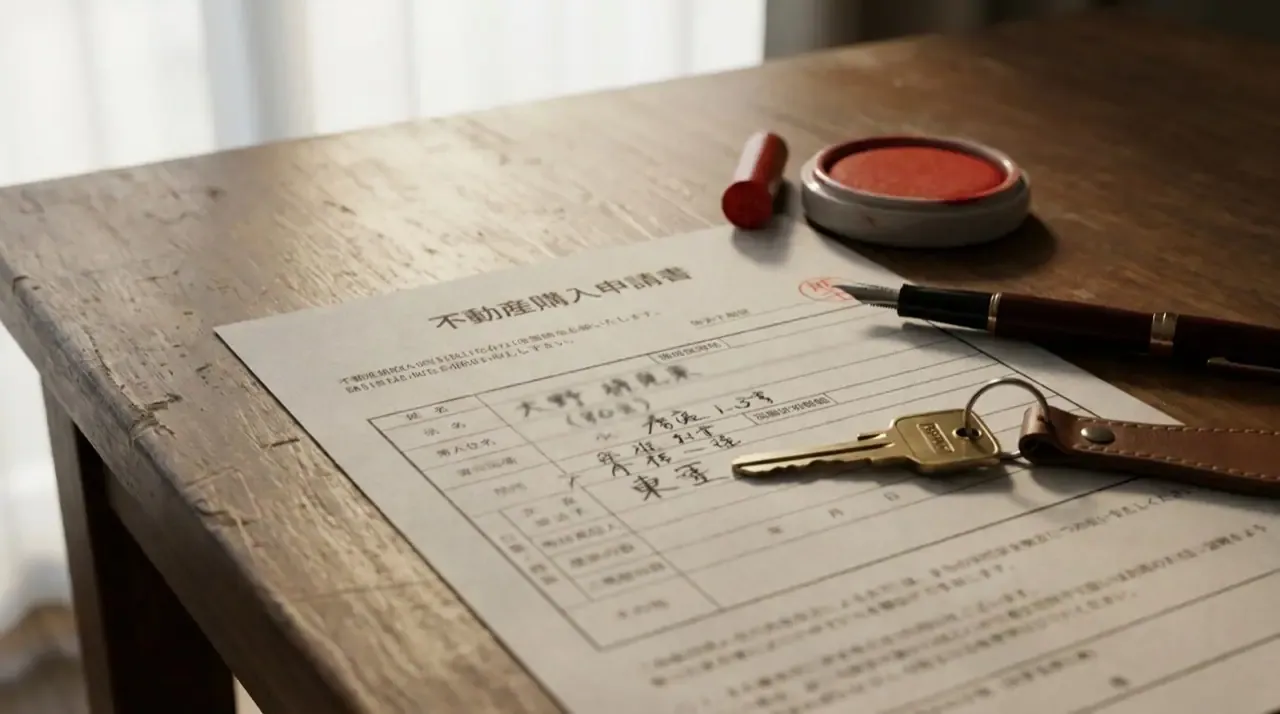
TL;DR: The purchase application (kaitsuke shomeisho) is Japan’s offer letter — it states your intended purchase price and basic conditions. Not legally binding. The seller can accept multiple offers and choose freely. The binding moment comes only when you sign the purchase contract and pay the deposit. Understanding the difference shapes how you negotiate.
A client submitted a purchase application at full asking price, heard nothing for five days, then learned the property sold to someone else — same price — because the other buyer’s agent had a better relationship with the seller’s agent.
He was furious. He felt deceived. He wasn’t. He just didn’t understand how Japanese offers work.
Japan’s offer process rewards relationships, speed, and certainty signals. Price helps. It’s not the only variable.
What exactly is a purchase application and what does it contain?
It’s a one-page letter (sometimes two) expressing your intent to purchase. Typical contents:
- Buyer name and contact details
- Property address
- Intended purchase price
- Intended settlement date
- Any conditions (financing, inspection, etc.)
- Expiry date of the offer (often 7–14 days)
- Buyer signature
No standard legal form. Your agent’s template will vary. Some are formal letters; some are simple fill-in documents.
You are not obligated to purchase once you submit one. The seller is not obligated to accept or even respond. Either side can walk at this stage with no financial consequence.
From the desk — The buyers I watch lose properties are rarely outbid on price; they are outpaced on certainty. Across the offers I have handled, sellers here lean toward the cleanest terms and the agent they already trust, and a buyer who signals eagerness or stacks on contingencies quietly hands away the leverage they thought price was buying them.
How does price negotiation actually work in Japan?
Through agents, not directly. You submit your price via the purchase application; the seller’s agent communicates the response. Uncommon to negotiate directly with the seller in Japanese residential transactions.
A few realities about negotiation:
Seller type matters. Developers and institutional sellers rarely discount. Private sellers, especially if the property has been listed for months, have more flex. Distressed sellers or estate properties sometimes prioritize speed over price.
Showing urgency kills leverage. If your agent tells the seller’s agent you’re leaving Japan in a week and “really want this,” expect full asking price. Eagerness signals hold firm.
Condition concessions sometimes work better than price. Offering a faster settlement, no inspection contingency, or flexible handover date can move a seller when a price cut won’t. Japanese sellers value certainty and simplicity.
Lowball offers damage your credibility. Submitting 20% below asking on a well-priced property doesn’t open a negotiation — it ends one. A reasonable opening for negotiation is typically around 3–8% below asking on a private sale. More than that, and you’d better have a compelling reason.
What happens if multiple offers come in at the same time?
The seller chooses. No legal requirement to accept the highest offer, take the first offer, or disclose competing offers to you.
In practice, competing offers in Tokyo’s active areas (Shibuya, Minato, Shinjuku, parts of Setagaya) are common. Agents sometimes run informal bid rounds. Sometimes the seller just picks based on who they heard from first.
Frustrating for buyers who expect a clear process. There isn’t one. In competitive areas, moving quickly with clean terms — no conditions, confirmed cash, short settlement — matters more than a marginally higher price.
What conditions can you include in a purchase application?
Any conditions you want — but each one reduces your appeal to the seller.
Common conditions:
- Financing contingency: “Purchase contingent on securing mortgage approval”
- Inspection period: “Purchase contingent on satisfactory building inspection”
- Specific settlement date
- Items to be included (appliances, furniture, fixtures)
The conflict: standard Japanese contracts are not designed around contingencies. A seller’s agent receiving a heavily conditional purchase application will often advise their client to pass. The cleaner your offer, the more competitive it is.
For foreign buyers who need a mortgage, the financing contingency is important. Include it. Understand it costs you.
What does “verbally accepted” actually mean?
When the seller’s agent tells your agent the seller has accepted, that’s a verbal agreement. Not binding under Japanese law.
Some agents treat verbal acceptance as nearly binding. Others don’t. A seller can technically accept your offer verbally, then accept a higher offer the next day before you’ve signed anything. Legally allowed. Considered bad form — which provides practical deterrent, not legal protection.
Move quickly from verbal acceptance to signed purchase contract. The longer the gap, the more exposed you are.
Where this goes wrong
- Submitting a purchase application without having your finances ready. If the seller accepts and wants to sign next week, you need your funds accessible and your documents in order. Being accepted and then causing delay signals unreliability.
- Assuming verbal acceptance is binding. Until the purchase contract is signed and the deposit is paid, either side can exit cleanly.
- Not specifying an expiry date. Open-ended offers create ambiguity. If you don’t set an expiry, your agent may be waiting weeks for a response that never comes while you could be moving on to other properties.
- Letting your agent submit too many offers simultaneously. In the same market area, submitting on multiple properties and then withdrawing multiple offers creates a reputation problem for your agent. Be selective about what you formally offer on.
- Underestimating agent relationship dynamics. In a multiple-offer situation, a seller’s agent has some incentive to favor buyers represented by agents they know and trust. Informal, not systemic — but real.
FAQ
Q: Can I submit a purchase application directly to the seller without an agent? A: Technically yes — you can contact a seller directly if they’re listed without exclusive representation. In practice, almost all properties listed with agencies go through agent-to-agent communication. Attempting to bypass the listing agent will usually end the relationship with that agent.
Q: Does the purchase application need to be in Japanese? A: For submission to a Japanese seller via a Japanese agent, yes. Your agent should prepare this. If you’re writing your own, have it reviewed.
Q: Can a seller accept my offer and then sell to someone else? A: Until the purchase contract is signed, yes — legally. The seller would face reputational damage and their agent might lose goodwill in the market, but there’s no legal penalty. Uncommon but it happens.
Q: Is there a minimum price I can offer? A: No legal minimum. Offer what you believe the property is worth. Aggressive low offers on reasonably priced properties usually end negotiations rather than starting them.
Q: What if I change my mind after submitting a purchase application but before the contract? A: Withdraw. Tell your agent. You lose nothing financially at this stage. You may inconvenience the seller’s agent, but there’s no legal or contractual consequence.