LIVING IN JAPAN
The Guarantor System Explained by Someone Who's Stood on Both Sides of It
A Tokyo-based insider explains Japan's rental guarantor system from both sides — as a tenant who needed one and as a Tokyo-based insider who's…
On this page 8
TL;DR: Japan’s rental guarantor system asks a human being to accept full financial liability for your lease — including unpaid rent and any damage costs. Most foreigners can’t find that person. The corporate guarantee company (hosho gaisha) has replaced the personal guarantor for most transactions, but understanding the original system explains why landlords still care so much about the corporate version.
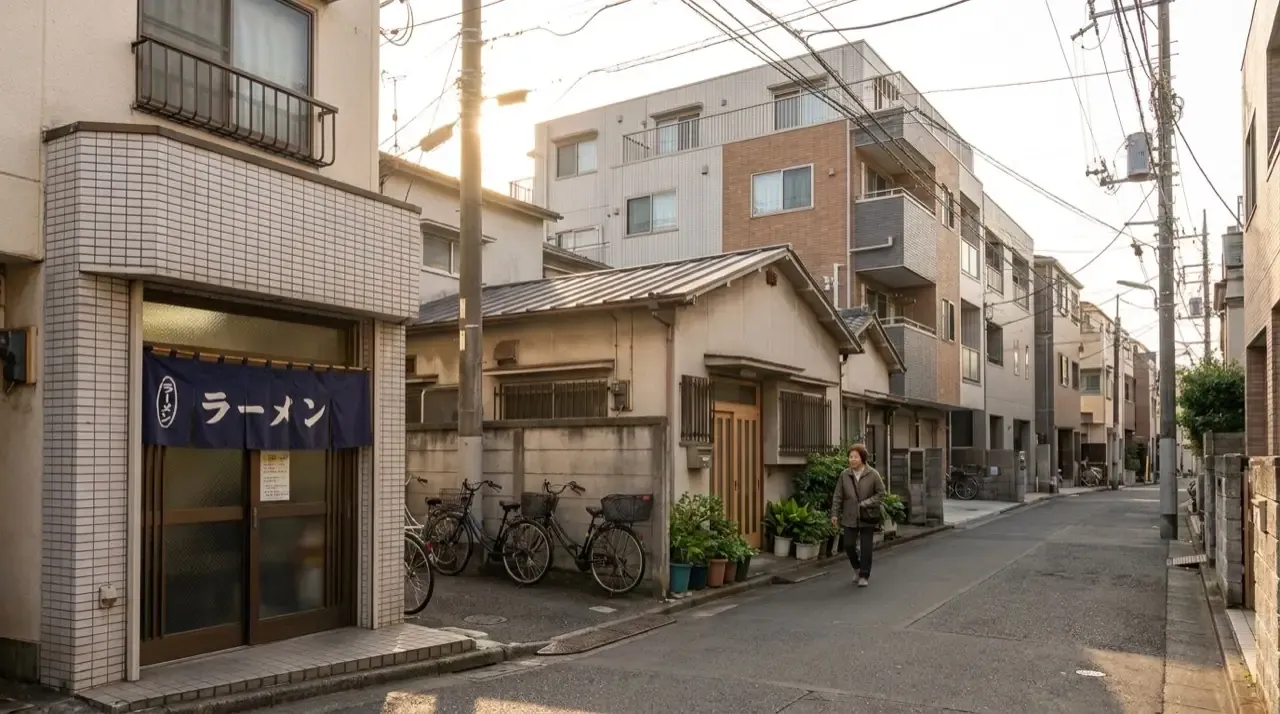
In 2014, my colleague Takuma asked me to be his guarantor on an apartment in Meguro. He’d known me three years. We’d worked at the same firm. We went for ramen sometimes. He slid the paperwork across his desk — the joint-and-several guarantor contract (rentai hoshounin) — and explained that if he ever stopped paying rent or trashed the apartment and didn’t pay for repairs, his landlord could come to me for the full amount. Not after trying to collect from Takuma first. Me. Directly. First.
I signed. He was a good friend. He paid his rent. Nothing happened.
But I remember reading that contract and thinking: this is a remarkable thing to ask of someone.
A decade later, I’ve watched hundreds of foreign tenants walk into the Tokyo rental market not understanding that the question “do you have a guarantor?” isn’t bureaucratic box-checking. It’s asking: do you have a Japanese person who trusts you enough to stake their finances on your behavior?
What the Personal Guarantor (rentai hoshounin) Actually Commits To
The rentai hoshounin is a joint-and-several guarantor. A specific legal category under Japanese civil law. It means:
- The guarantor can be sued directly, without the landlord first exhausting remedies against the tenant
- The guarantor is liable for the full lease obligation — not a portion of it
- This includes unpaid rent for the entire remaining lease term if the tenant abandons the property
- This includes restoration costs if the tenant damages the unit and can’t or won’t pay
No cap by default, unless the contract specifies one. A 2020 Civil Code amendment now requires that personal guarantor contracts include a written maximum liability amount (kyokudo-gaku), which is a real improvement. The obligation is still significant — typically set at 12 to 24 months’ rent equivalent.
Asking a friend or colleague to accept this is, in the Japanese social context, a substantial request. It implies deep mutual trust. Refusing is not easy. Accepting is not trivial.
From the desk — The friction I watch land hardest isn’t the guarantee company fee itself — it’s the short visa. Time and again I see a perfectly solid applicant, good income, real employer, get a soft decline simply because the residence card expires in under a year and the underwriter quietly prices that as default risk; lead with a renewal letter from your employer and that conversation goes very differently.
Why Foreigners Can’t Meet This Bar
Most newly-arrived or mid-tenure foreign residents don’t have a Japanese person in their life who:
- Understands the legal weight of what they’re signing
- Trusts the foreigner completely enough to sign it anyway
- Has sufficient financial standing to satisfy the landlord that they could actually cover the liability
Number three is often overlooked. Landlords can and do reject guarantors they consider financially insufficient. Bring a Japanese acquaintance who earns ¥3.5 million a year as your guarantor for a ¥200,000/month apartment, and the landlord may decline the arrangement. The guarantor needs to be financially credible, not just Japanese.
This is why the personal guarantor system essentially barred most foreigners from the private rental market for decades. You needed a social network that most new arrivals simply didn’t have.
Related reading: How I Passed Rental Tenant Screening as a Foreigner on My Third Try.
Related reading: Key Money (Reikin): The ¥0-Return Gift to Your Landlord, and How to Avoid It.
How the Guarantee Company Changed the Game
The hosho gaisha — corporate guarantee company — emerged as a commercial solution. The tenant pays the guarantee company a fee (typically 0.5–1.0x one month’s rent upfront, plus an annual renewal fee of around ¥10,000–¥20,000), and the guarantee company takes on the landlord-facing liability. If the tenant defaults, the guarantee company pays the landlord and then pursues the tenant for recovery.
Accessible to foreigners in principle. You’re not asking a person for a favor. You’re buying a service.
The complication: guarantee companies screen applicants. They’re private companies. Their criteria aren’t published, their decisions aren’t appealable, and the reason for rejection is rarely disclosed. Some companies are more cautious with foreigners than others. Some are better at handling non-permanent-resident visa categories. Some refuse certain nationalities outright (not widely documented but something agents know informally).
Major players in the Tokyo market: ORICO Rent, Casa, Cosmos Initia, Saison Guarantee, INTAGE Rent. Each has a different risk appetite. Your agent should know which ones are more foreigner-friendly — ask directly.
Being Asked to Be a Guarantor — What You’re Actually Agreeing To
If you’re a foreigner who’s been here long enough that Japanese colleagues or friends are asking you to be their guarantor — congratulations, your social integration is real. Also: read the contract.
The maximum liability amount (kyokudo-gaku) must be stated. If it’s not in the contract post-2020, the guarantor’s obligation is legally void under the Civil Code amendment. Make sure it’s there and you understand the ceiling.
If the tenant is someone you trust completely and you have the financial standing, it’s a meaningful thing to do. Don’t sign under social pressure without understanding the liability. I’ve seen guarantors genuinely surprised when a defaulting tenant resulted in a court claim against them personally.
The System Today: Corporate Guarantee Still Has Gaps
Even with the guarantee company system in place, foreign tenants encounter specific friction points:
Short visa duration. If your visa expires in 8 months and you’re applying for a 2-year lease, some guarantee companies won’t issue coverage. They see visa non-renewal as a default risk.
Employer stability. Small companies and freelance arrangements make guarantee companies nervous. The question they’re asking is: will this person have income throughout the lease? A letter from a large Japanese company carries more weight than a contract from a 10-person startup.
Prior credit issues in Japan. If you’ve had unpaid NHK fees, phone contract defaults, or any Japanese credit history problem, some guarantee companies will find it. Japan’s credit bureaus are connected.
The agent’s relationship with the guarantee company. Larger real estate agencies have preferred guarantee companies and smoother application processing. A small local agency might only work with one or two companies, and if those companies are strict on foreigners, you’re stuck.
Where This Goes Wrong
- Assuming the guarantee company approval is a formality. Budget extra time in your apartment search for a possible guarantee company rejection and a resubmission.
- Not asking your agent which guarantee companies are more foreigner-friendly. Reasonable question. An experienced agent will have an answer.
- Letting a Japanese friend sign as guarantor without explaining what they’re signing. If they don’t read the contract carefully, you’re putting a friendship at risk. Explain it before they sign.
- Forgetting about the annual renewal fee. The guarantee company fee doesn’t end after year one. Budget around ¥10,000–¥20,000 per year into your ongoing housing costs.
- Not checking whether the guarantee company approval is transferable if you move to a different unit in the same building. Sometimes it is. Most tenants never ask.
FAQ
Q: Can I refuse to use a guarantee company and offer a personal guarantor instead? Yes, but many landlords and management companies now default to requiring a guarantee company regardless. Some won’t accept personal guarantors at all — partly for standardization, partly because chasing individual guarantors is harder than chasing corporate ones.
Q: Does permanent residency help with guarantee company approval? Significantly. PR removes the visa-duration concern and puts you in a similar risk tier to Japanese nationals for most guarantee companies. If you have PR, lead with it.
Q: What happens if the guarantee company rejects me? Your agent should try a different company. This requires asking. If the agent gives up after one rejection, you may need to push or find a different agent.
Q: Can I be my own guarantor? No. The guarantor exists precisely because it’s a third party. Self-guaranty has no legal effect in Japanese rental contracts.
Q: What does the guarantee company annual fee cover? It covers the company’s ongoing liability for your lease. Renew your lease, renew their coverage. Don’t pay the renewal fee, coverage lapses — and the landlord may treat this as a contract violation.
Next issue: Tokyo now often wants both a guarantee company and a personal guarantor. Why the system doubled up, what it means for foreigners, and whether you can negotiate your way out of it.
The buyer’s angle
The quiet escape hatch: owners don’t need a guarantor. The entire guarantor apparatus exists to protect a landlord from a tenant. When you own, you are the landlord side of that equation — the requirement evaporates. If the rental side is wearing you down, that’s usually the clearest signal it’s time to price out owning instead — where most of these barriers simply don’t apply. See the buying track and run the numbers in our tools.