INSIDER TAKE
The Yen at a 30-Year Low: The Quiet Story Behind the World's Cheapest Hard Asset
How the yen hit a 30-year low, why it slashes the USD entry price into Tokyo property, and the two-bet thesis every foreign buyer should understand.

On this page 9
TL;DR The yen is roughly 30–40% weaker against the dollar than it was in 2012, and sitting near 30-year lows against a basket of major currencies. For a foreign buyer, that gap is not just a talking point — it mathematically cuts the USD entry price of a Tokyo apartment by roughly a third versus a decade ago. A tourist spends that discount on ramen and hotel rooms; a buyer locks it into a yen-denominated hard asset at the deed. The trade is a two-leg bet: the hard asset itself, and the currency normalizing. Both have a plausible thesis. Neither is guaranteed.
The Divergence That Built the Discount
Every currency story is really a story about two central banks moving in different directions.
From 2021 onward, the Federal Reserve went on the most aggressive tightening cycle in forty years. Rates from near zero to north of five percent in roughly eighteen months. Meanwhile, the Bank of Japan did essentially nothing. It kept its policy rate at or below zero and — more unusually — kept buying government bonds to pin the 10-year yield near zero through a policy called yield curve control, or YCC.
The logic in Tokyo was never crazy. Japan had spent thirty years failing to generate inflation. When the rest of the world finally got inflation, the BOJ’s response was: let’s see if this sticks first.
Capital flows are blunt. Money went where yield existed. The dollar paid you five percent. The yen paid you nothing. Carry traders borrowed yen at near-zero cost, bought dollar assets, and collected the spread. The yen fell. Then it kept falling. By mid-2024 it had broken 160 to the dollar — a level not seen since the early 1990s, when Japan’s bubble economy was still inflating.
The discount on everything priced in yen — apartments, stocks, restaurant meals, hotel rooms — is a direct consequence of that policy gap.
From the desk — In my own closings the buyers who fixate on timing the yen are the ones who never buy; the ones who treat the currency as a bonus rather than the thesis are the ones who actually own something five years later. I watch the same hesitation every cycle, and the apartment that was available last spring is gone by the time they decide the rate is finally right.
The Discount Locals Can’t See — and Tourists Only Eat
Here is the part that confuses most people when they first look at Tokyo. Ask a resident in Setagaya whether property is cheap right now and they will laugh at you. In yen terms, condo prices in central Tokyo have been grinding higher for years. Locals earning, saving and borrowing in yen feel that fully. To them, nothing is on sale.
But you are not buying in yen. You are buying in dollars, euros or Singapore dollars, and converting at the till. That conversion is where the discount lives — and it is invisible to anyone whose whole financial life is denominated in yen. The weak currency is a subsidy that only shows up when your money starts in another currency.
As of writing, USD/JPY sits around ¥160 (directional). That is roughly the weakest the yen has been against the dollar since the mid-1980s — a four-decade extreme, not a normal cyclical wobble. One honest caveat up front: “35% discount” is a directional framing versus a stronger-yen baseline, not a precise sticker. The exact number depends entirely on which exchange rate you compare against. The direction, though, is not in dispute.
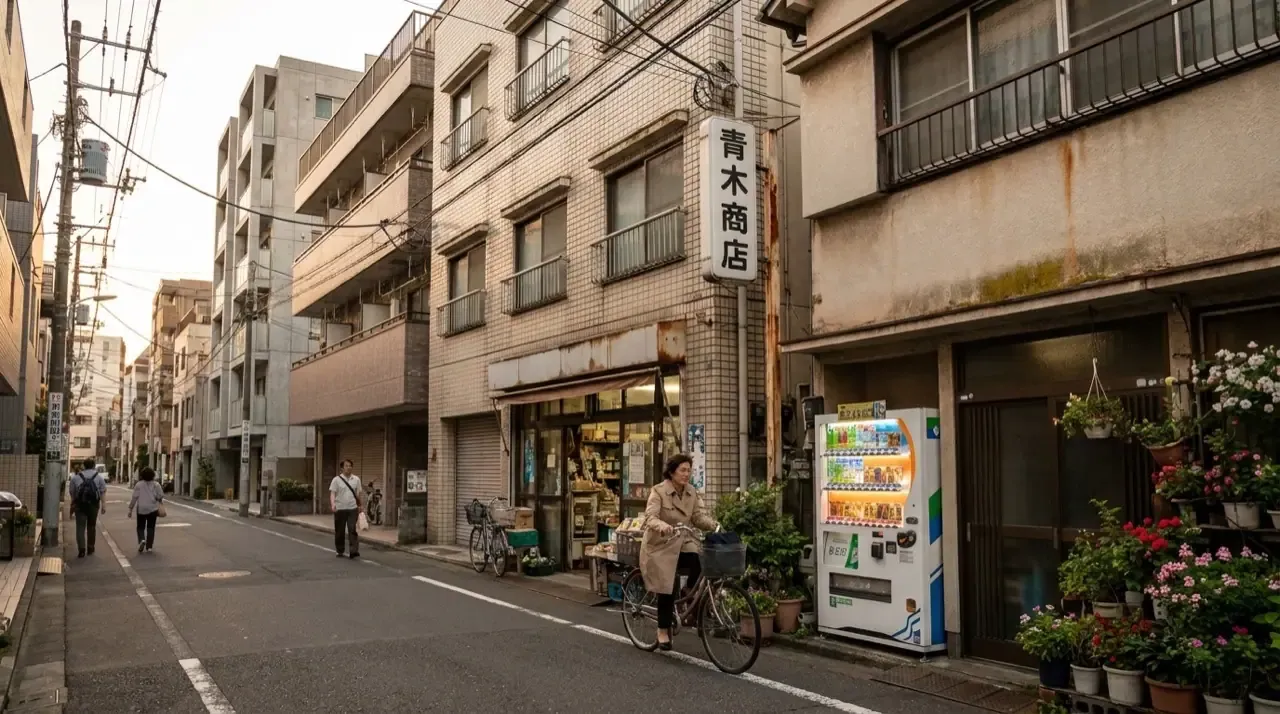
There is a second group that can see the discount, and mostly spends it. Walk through any inbound-heavy corner of Tokyo right now and you can practically hear visitors doing exchange-rate math out loud, delighted: Japan is so cheap right now. They are not wrong. But notice what kind of discount it is. It’s a discount on consumption. You eat the ramen. You sleep in the hotel. You fly home, and the discount is spent — converted into memories and souvenirs, which are lovely and worth nothing on a balance sheet. And it’s fragile: the day the yen reverts, next year’s ramen costs more. There’s nothing to lock in, because there’s nothing to keep.
A buyer is looking at the identical exchange rate and seeing something else entirely. When you convert hard currency to buy a Tokyo condo, the weak yen isn’t marking down a meal — it’s marking down a yen-denominated hard asset that stays on your balance sheet for years. The discount doesn’t get eaten. It gets deeded. The moment you settle, your purchase price in your home currency is fixed. The tourist’s discount expires Friday. The buyer’s discount is permanent the day the scrivener registers the title. The tourists are standing inside the largest asset discount of their lifetime and treating it like a coupon for lunch.
Related reading: JPY Currency Risk for the Foreign Tokyo Property Buyer: A Field Guide.
What the Numbers Look Like in Your Currency
Framing this in yen is useless to a foreigner. Here’s what the divergence actually costs or saves.
A Tokyo apartment listed at 50 million yen at 110 yen/dollar (circa 2013) would have cost a US buyer roughly $455,000. At 155 yen/dollar, that same nominal price costs about $322,000. That’s a $130,000 discount without the seller moving a single digit on the sticker price.
Scale it up and the effect gets dramatic. Take a ¥100M Tokyo condo — a realistic central-ward number, not a trophy unit — and price it in dollars at two exchange rates (illustrative, to isolate the FX leg with the asset held constant):
- At ¥110 to the dollar, that ¥100M condo costs roughly $910,000.
- At ¥160 to the dollar, the identical ¥100M condo costs roughly $625,000.
Same concrete. Same address. Same tenant. Same yen price tag the seller never changed. The only thing that moved is the exchange rate — and it moved the dollar cost by nearly $285,000. At the very top of the market, a ¥300M prime penthouse — the kind of central-Tokyo trophy unit that anchors a building in Minato or Shibuya — works out to under $2M at ¥160 per dollar. At a “normal” ¥120 yen, that same unit in dollar terms would cost you 30–40% more. And at the other end: at about ¥155 per dollar back in February 2026, Japan’s national-average home — roughly ¥42M — penciled out to about $271,000 (directional, as of writing). Push the rate to ¥160 and that identical yen price costs even fewer dollars.
Flip the reference to euros. In 2013, one euro bought around 130 yen. By 2024, one euro bought around 165 yen. For a European buyer, the directional math is similar: Tokyo is 20–25% cheaper in euro terms than it was a decade ago on the currency alone.
For Singaporean buyers, historically active in Japanese property, the SGD/JPY move has been even more dramatic — from around 80 to above 110. Singapore buyers are getting roughly 35–40% more yen per Singapore dollar than they were a decade ago. That’s the kind of number that turns a “mildly interesting” market into an active one.
None of this says property prices in yen have been flat. In central Tokyo, they haven’t. Good locations have appreciated. But the currency tailwind has swamped a lot of that movement in foreign-currency terms. Since Abenomics began in late 2012, Tokyo condo prices roughly doubled in yen while the yen lost roughly half its dollar value — so a unit that ran about $700k for a dollar buyer in 2012 and a record-price unit around $890k in 2025 are far closer in dollar terms than the screaming yen chart suggests, because the currency collapse absorbed most of the yen price surge.
The gap has been widening, not closing. The yen weakened roughly 1.9% over the past month and about 10.5% over the trailing twelve months (as of writing). USD/JPY started 2026 near ¥152.5 — a late-January low — and drifted past ¥160 by June. Even inside a single year, the entry point moved meaningfully in your favor. That will not always be true, which is the whole point of the window below.
If you want to pressure-test these conversions against today’s live rate before you do anything else, run your target price through our Tokyo money comparator so you are looking at your actual home-currency number, not a stale headline figure.

Two Bets at Once
Here is the idea worth sitting with.
When a foreigner buys Tokyo real estate right now, they aren’t making one bet. They’re making two:
Bet one is on the asset. Tokyo rents, Tokyo land values, the demographic and structural story of the city’s core districts. That’s a standard real estate thesis and you can evaluate it on its own terms.
Bet two is on the yen. The currency is, by most measures, deeply undervalued on a purchasing power basis. If it reverts — not to bubble-era levels, just toward its longer-run historical average — then the dollar value of that Tokyo apartment rises automatically, even if the yen price never moves.
The two-bet structure is unusual. Most of the time when you buy foreign real estate, currency adds noise and friction but not this kind of structural tailwind. Japan is different right now because the policy divergence was so large and so prolonged that the undervaluation has become visible and quantifiable.
An investor buying at 155 yen/dollar and eventually selling at — say — 120 yen/dollar books a 23% currency gain on top of whatever the property did. That’s not speculation about Japan having some secret growth story. It’s a mean-reversion view on a currency that most currency models agree is cheap.
This is also why a weak currency is not the same as a cheap one. Weak is a price. Cheap is a price relative to value. The yen is both right now, by independent measures — and a buyer is positioned to capture that gap permanently, while a tourist can only borrow it for a week.
The Window Is Narrowing
This is the part that creates urgency without manufactured panic.
The Bank of Japan moved. Slowly, reluctantly, with the most elaborate throat-clearing in central bank history — but it moved. In early 2024, it exited negative interest rates for the first time since 2016. YCC was effectively abandoned. The policy rate, while still low by global standards, is moving.
The yen carry trade, which had been a one-way gravity pull on the currency, got violent in August 2024. Global carry trades unwound over a few days, the yen surged, and equity markets dropped sharply. It was a reminder that carry trades don’t unwind gradually. They unwind in shocks.
The BOJ is now in normalization mode. How fast? That depends on whether Japan’s inflation sticks, whether wage growth holds, whether the global economy stays accommodating. Nobody knows. But the direction is clear. Every rate hike the BOJ delivers compresses the interest rate differential with the dollar. A narrowing differential means less incentive to hold the carry trade. And less carry trade pressure means a stronger yen, mechanically.
The window where you combine maximum currency weakness with reasonable asset prices isn’t permanently open. It closes as the BOJ normalizes. If the yen eventually retraces toward ¥120–130, the FX discount you are looking at today simply evaporates for anyone arriving late.
Here is the asymmetry that matters. The buyer who closes near ¥160 locks the conversion in at the deed. Your purchase price in dollars is fixed the day you settle. If the yen later strengthens to ¥130, you did not just buy at a discount — you bought an asset that is now worth more in your home currency than you paid, on the FX move alone, before a single yen of price appreciation. The late buyer pays the full, un-subsidized dollar price. This is what “the discount locks in for whoever bought at the bottom” actually means in your bank account.
You Are Not the Only One Who Noticed
If this felt like a secret, it isn’t — and that is actually reassuring rather than alarming. Foreign buyers reached roughly 19% of condo transactions in the prime central wards of Chiyoda, Minato and Shibuya in the first half of 2025, and more than 27% of all Japan property purchases across 2025, up from around 21% five years earlier. Much of that surge is attributed directly to the weak yen.
So this is a recognized, crowded thesis, not a fringe bet you talked yourself into. That cuts both ways, and you should hold both sides honestly:
- The upside: deep, liquid foreign demand means you are buying into a market other serious cross-border buyers want, with comparable transactions to anchor pricing and a real resale audience when you eventually sell.
- The downside: prime sellers know exactly what you know. They know dollar buyers are saving on FX, and they increasingly hold firm on the yen asking price rather than discount it. The FX subsidy is real, but it is not infinite — sellers are clawing some of it back through stickier yen prices, especially at the trophy end.
What Could Go Wrong
The case for the yen reversion is coherent. That doesn’t make it inevitable.
The yen has looked cheap on purchasing power metrics for years. It kept getting cheaper. Structural factors — Japan’s persistent current account dynamics, demographic headwinds, corporate repatriation patterns — could keep it weak longer than any model suggests. Currency mean-reversion is real; the timeline is unknowable. The case for moving is not “the yen will definitely bounce next quarter.” It is that you are being handed an unusually favorable entry today, and that favorable entries at four-decade extremes do not tend to last indefinitely.
More pointedly: if you’re buying a Tokyo apartment with dollars and the yen weakens further from here — toward 170, 180 — the yen value of your asset looks fine but your dollar mark-to-market bleeds. You’re not losing in the real sense, but you have to be willing to hold through it. The currency is leverage on your conviction, in both directions — not a free lunch. Illiquid real estate in a foreign currency during a drawdown is not a comfortable position for everyone.
There’s also the asset side. Tokyo central ward prices have been rising fast. Some segments, especially the new-build condominium market, have moved ahead of rent growth. The cap rates in trophy locations are thin. You can get the macro story right and still overpay for the property.
The two-bet framing works in your favor when both legs go right. It compounds against you if you’re wrong on both.
How to Actually Move on This
The currency hands you the entry. What you do with it is on you. A practical sequence:
First, fix your number in your own currency. Decide your real budget in dollars, euros or Singapore dollars, then convert at the live rate — not a number you half-remember from last year. Use the money comparator so every property you look at is priced in the currency you actually think in.
Second, choose the ward before the unit. The FX discount applies everywhere, but liquidity, foreign-buyer depth and rental demand do not. Central wards with proven cross-border demand behave very differently from outer areas. Start with the ward guides and the side-by-side compare tool to narrow down before you fall for a specific listing.
Third, learn the local cost vocabulary so nothing ambushes you at signing. Reikin (a non-refundable “key money” gift to the seller or landlord, common in leasing) and other Japan-specific line items can quietly add to your all-in cost. The glossary covers the terms that matter so your dollar math stays honest through to closing.
Fourth, negotiate in yen, not in dollars. Your FX advantage is locked the moment you convert — so do not give it back by overpaying on the yen price because the dollar figure “still looks cheap.” A unit that is cheap to you in dollars can still be overpriced in yen, and that overpayment is real money you keep forever.
From the desk — In a decade of closings, the pattern I see most is overseas buyers who fixate on the dollar number and stop negotiating once it ‘looks cheap’ — then quietly overpay in yen by a margin that dwarfs whatever the agent’s discount would have been. The FX gift only stays a gift if you keep haggling on the yen price like a local who never heard the word ‘discount.’
If you’ve just come back from a trip where everything felt cheap and you’re starting to suspect the ramen was the small version of a much bigger discount — that instinct is correct, and it’s exactly the bridge we walk in from a two-week trip to a title deed.
The honest bottom line: a near-¥160 yen is a once-in-a-generation entry point for hard-currency buyers, and as of writing the window is still open. You do not control how long it stays open or where the yen goes next — but you fully control whether you are positioned to act while the discount is real. We send a free newsletter that runs the buyer’s-side math in plain numbers, with no price predictions and no hype: join it here.
FAQ
Does the weak yen make Japanese property cheap in absolute terms? Directionally yes, but it depends on location and type. Central Tokyo new-build condominiums are expensive even in yen. Older units, suburban properties, and markets outside Tokyo can look very cheap by global standards. The currency discount makes a broader range of inventory accessible to foreign buyers than would otherwise make sense financially.
Can foreigners actually buy property in Japan? Yes. Japan has no restrictions on foreign ownership of real estate. You don’t need permanent residency or a Japanese spouse. You do need to navigate the transaction in Japanese (which requires a licensed agent and often a licensed translator), and financing from Japanese banks is significantly harder to obtain without Japanese residency. Most foreign buyers pay cash or bring financing from home.
What happens to my property value if the yen strengthens? The yen value of your property doesn’t change based on currency moves — only the translated value in your home currency changes. If the yen strengthens from 155 to 120 per dollar, a 50-million-yen apartment is still worth 50 million yen in Japan. You’ve gained roughly 23% in dollar terms from the currency alone. That’s the reversion upside.
Is rental income also affected by currency? Directly. Rent is paid in yen. If you’re calculating yield in dollars, the yield in dollar terms moves with the exchange rate. At 155 yen/dollar, a property generating 2 million yen/year in rent yields about $12,900. At 120 yen/dollar, the same rent yields about $16,700. The yield in your home currency improves automatically as the yen strengthens.
How long has this yen weakness lasted? The structural decline accelerated from 2012 onward under Abenomics, which explicitly targeted a weaker yen as a competitiveness tool. The most dramatic leg down came 2021–2024 as the Fed/BOJ divergence widened. So this isn’t a brief blip — it’s a decade-long move. That’s also why it may not snap back overnight.