WARDS & MARKETS
Shibuya Ward Property Guide: Daikanyama, Ebisu & Shoto for Foreign Buyers
Shibuya Ward's best addresses — Daikanyama, Ebisu, Shoto — sit at Tokyo's lifestyle-prestige crossroads.
On this page 7
TL;DR: Shibuya Ward has some of Tokyo’s most desirable addresses for foreign buyers who value quality of life alongside property value. Daikanyama, Ebisu, and Shoto command roughly ¥1.2–2.0M+ per sqm. Yields are modest. The ward’s greatest strength is a wealthy, stable buyer pool that keeps liquidity high at the mid-to-upper price range. Don’t confuse the Shibuya scramble with the residential ward.
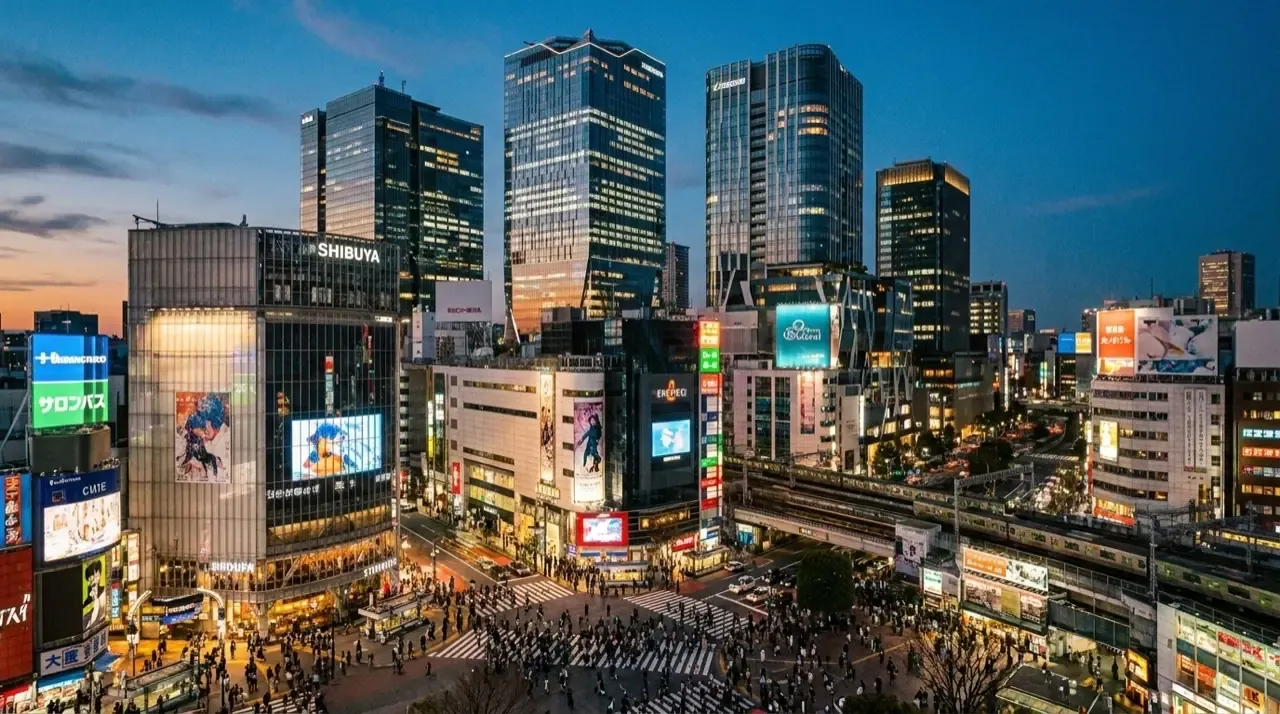
Most people hear “Shibuya” and picture the scramble crossing — thousands of people, towering screens, kinetic energy on full display. That’s Shibuya Station. The residential ward is different. Walk fifteen minutes south from the crossing and you’re on Daikanyama’s Hillside Terrace — a low-rise 1970s cultural complex designed by Fumihiko Maki, with independent boutiques and a café pace that belongs to a completely different city. Another ten minutes and you’re in Nakameguro, watching cherry blossoms above the canal. Walk west from the station and you climb into Shoto, where embassies and private homes sit behind hedges on hilly lanes.
The residential ward and the station district coexist. They’re not the same market.
What does property cost in Shibuya Ward?
The ward spans enough geography that pricing is uneven.
Shoto / Daikenzaka / Nanpeidai — the hilltop western residential pocket above Shibuya Station. Roughly ¥1.8M–¥2.5M per sqm is realistic for premium properties. Shoto specifically is Tokyo’s equivalent of Kensington — very quiet, very expensive, low supply. Low-rise detached houses here sell for ¥200M–¥500M+.
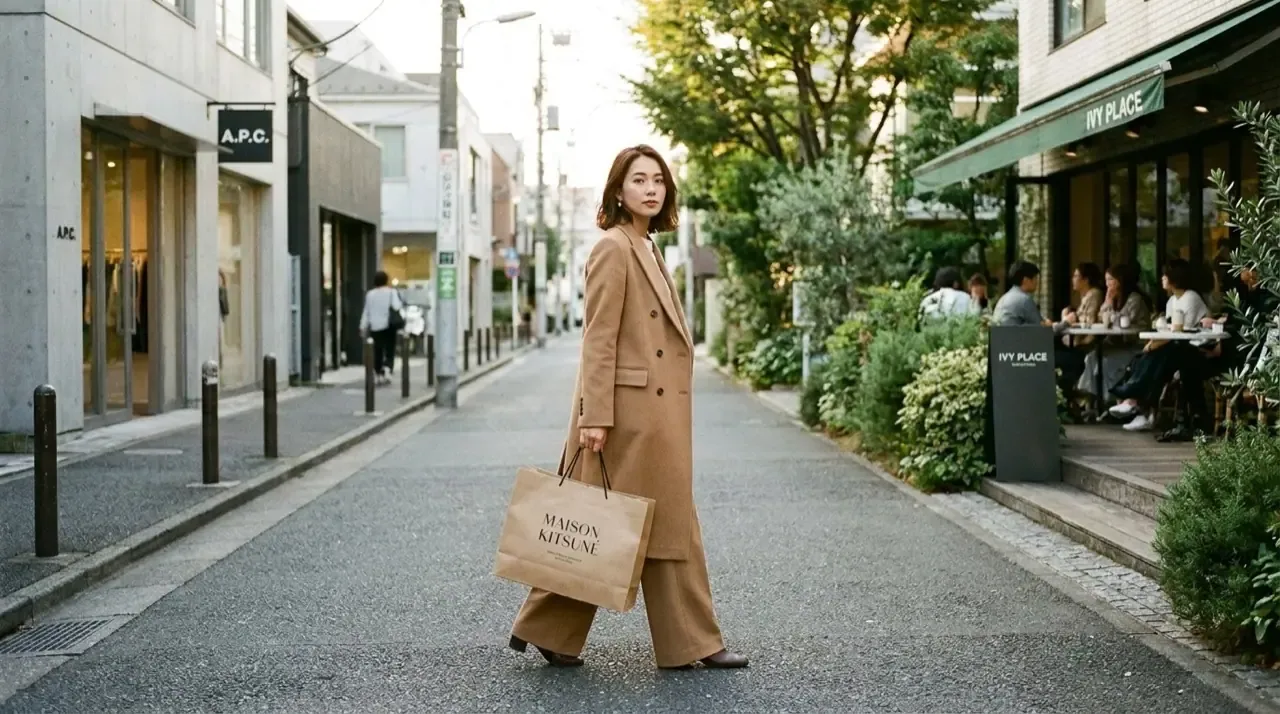
Daikanyama — flat, walkable, internationally flavored. Probably Tokyo’s most architecturally pleasant neighborhood. Per-sqm runs around ¥1.3M–¥1.8M for quality condominiums. Stock is limited because the neighborhood has historically resisted large-scale development.
Ebisu / Hiroo — these two bleed together. Ebisu is slightly younger, slightly more vibrant, better connected (Ebisu Station on the Hibiya and Shonan-Shinjuku lines). Hiroo is quieter, home to significant diplomatic and expat community, and contains some of the most desirable low-rise apartment complexes in Tokyo. Pricing: roughly ¥1.2M–¥1.7M per sqm, higher for specific addresses near Hiroo’s French school area.
Hatagaya / Honmachi / Nishihara — the western and northern residential edges. More affordable at around ¥700,000–¥1.0M per sqm. Perfectly livable, less lifestyle-premium.
Nakameguro — administratively partly in Meguro Ward, but many buyers consider it Shibuya-adjacent. The Meguro River corridor has seen significant appreciation since the early 2010s. Current pricing for desirable canal-adjacent stock: roughly ¥1.2M–¥1.6M per sqm.
From the desk — In the years I have worked this ward, the buyers who struggle are the ones expecting a Daikanyama lifestyle address to also throw off yield, and I spend a fair amount of time talking people out of that contradiction. The recurring trap I see is the beautiful old Hiroo low-rise that photographs like a dream and hides a deferred maintenance bill; the clients who insist on the building’s repair and seismic records before falling for the garden are the ones who sleep well afterward.
Related reading: Setagaya Ward Guide: Why Tokyo’s Biggest Ward Is Its Most Family-Loved.
Related reading: Shinjuku Ward Guide: Kagurazaka Charm vs Kabukicho Risk.
Why do foreign buyers specifically like Shibuya Ward?
The French establishment is the headline. The Lycée Franco-Japonais de Tokyo is in Hiroo. As a result, there’s a substantial French and broader European residential community in Hiroo, Ebisu, and Daikanyama. English-language services, international grocery stores (National Azabu in Hiroo), and multilingual agents are all better-represented here than in most wards.
Lifestyle infrastructure is also strong. Ebisu Garden Place. Daikanyama T-Site. Log Road Daikanyama. The density of quality restaurants, gyms, and cultural venues per square kilometer is genuinely high.
The social fabric of the ward — international architects, creative directors, media executives, finance professionals — creates a residential peer group that many foreign buyers find comfortable. This sounds soft as an investment criterion. But the kind of people who live in a neighborhood determines how it ages, how the homeowners association functions, and what the exit buyer pool looks like.
What are the best specific areas to target?
My honest ranking for a foreign buyer:
Hiroo — top pick for families, especially European nationals. Strong community infrastructure, relative quiet, excellent expat support network. Downside: older mid-rise stock dominates and some buildings haven’t been well-maintained. Do your building due diligence carefully here.
Ebisu — better for working professionals without school-age children. The Ebisu-Nishi area is walkable and has well-maintained mid-rise stock from the late 1990s and 2000s. Better transport than Hiroo.
Daikanyama — ideal for buyers who want lifestyle and are comfortable with thin inventory. Supply is genuinely constrained. What comes up moves. High net-worth Japanese domestic buyers also want this area, which keeps prices firm.
Shoto — for buyers with large budgets and a preference for absolute quiet and low-rise living. Liquidity is thin and the buyer pool is narrow. Exceptional lifestyle purchase; less suitable for most foreign investors who need a clean exit.
What yields should I expect in Shibuya Ward?
Low. Gross yield in Daikanyama, Ebisu, and Hiroo runs roughly 1.8–3.0% on quality stock. Smaller units and specific buildings can push toward 3.5%. Net after costs lands around 1.5–2.5%.
You’re buying for appreciation and lifestyle access — the same logic as Minato. One difference: Shibuya Ward has more owner-occupier buyers, Japanese and foreign both. More competition at point of purchase, but also a thicker market at point of sale. The tenant pool here — embassy staff, creative industry professionals, international students from Keio’s nearby campus — is diverse and stable.
Related reading: Pick Your Tokyo Ward by Goal: Yield, Capital Growth, or Living — a Buyer Decision Guide.
What’s changing in Shibuya Ward over the next 5 years?
Shibuya Station is still mid-redevelopment. Scramble Square East Tower is complete; Central/West towers are under construction or planned. This will continue evolving the commercial core and — importantly for residential values — upgrade transport connectivity and the retail offer around the station.
Tokyu Corporation has been the dominant force here for decades and they’re continuing significant development. That generally has a price-positive effect on adjacent residential.
Where this goes wrong
- Paying a lifestyle premium and expecting yield. These two things are mostly incompatible in Shibuya Ward. Choose one as your primary motivation.
- Old Hiroo stock with deferred maintenance. Some of Hiroo’s classic low-rise mansions are beautiful from the outside and expensive to maintain. Plumbing, wiring, seismic retrofit status — check all of it before falling in love with the garden.
- Overcrowding near Daikanyama on weekends. Tourism to the T-Site area and Nakameguro canal has increased substantially. A noise issue, not a structural one, but worth knowing before you buy a ground-floor unit.
- Thin new supply means overpriced individual listings persist. In Daikanyama especially, sellers sometimes price on hope rather than comparables. Agents who work the area specifically know where the real market is.
- Slope-related transport. Shoto and the hilltop areas require walking uphill from any station. If mobility matters, the map undersells the incline.
FAQ
Is Daikanyama overrated as an investment location? Depends what you mean by investment. As a capital preservation asset in a desirable, internationally recognized neighborhood — no. As an income-generating investment — it’s priced for appreciation not yield, and thin supply means few opportunities to buy well.
How far is Hiroo from Roppongi and Minato’s expat core? Hiroo to Roppongi is about 1.5 km on foot, or a short cab ride. To Azabu-Juban it’s similar. Many families in Hiroo work or socialize in Minato Ward regularly.
Are there any new build condominiums in Shibuya Ward worth considering? New supply is limited. Occasional boutique projects appear in Ebisu and the Daikanyama edges, but large towers are rare because the ward’s residential areas lack the development plots. When a quality new project launches, it typically sells quickly and at a premium.
What’s the resale liquidity like if I need to sell in 3–5 years? Better than most outer wards, but not as liquid as Tsukishima or central Shinjuku. The buyer pool for a ¥100M+ Shibuya Ward apartment is well-heeled Japanese and international buyers — real people with real money, but not a mass market. Budget for 3–6 months to sell at a realistic price.
Is it possible to find properties under ¥50M in Shibuya Ward? On the edges — Hatagaya, Honmachi, Nishihara — yes. You’re not getting Daikanyama. You’re getting a functional Tokyo address in a well-served part of the city. Fine for practical buyers; don’t expect the lifestyle premium of the southern pocket.