WARDS & MARKETS
Shinjuku Ward Guide: Kagurazaka Charm vs Kabukicho Risk
A Tokyo-based insider compares Kagurazaka's stable investment case with the real risks of buying near Kabukicho in Shinjuku Ward.
On this page 12
- Is Kagurazaka a good area to buy property?
- What are property prices in the Yotsuya and Ichigaya areas of Shinjuku?
- What is the Kabukicho property risk for investors?
- How does Shinjuku Station’s scale affect nearby residential?
- What does the Nishi-Shinjuku redevelopment mean for buyers?
- The anchor: Shinjuku Station West Exit tower
- The residential play: Nishi-Shinjuku 3-chome
- The big frame: Shinjuku Grand Terminal
- What it costs and earns
- What are the best stations in Shinjuku Ward for rental investment?
- Where this goes wrong
- FAQ
TL;DR Shinjuku Ward contains some of Tokyo’s most desirable residential streets (Kagurazaka, Yotsuya, Ichigaya) and some of its most challenging investment geography (Kabukicho, areas west of Shinjuku Station). The ward name alone tells you nothing. This issue maps the gap between the two, with prices and yield ranges for each — plus the one part of the ward being torn up and rebuilt: Nishi-Shinjuku, where a 260m-class tower over the station’s West exit and two 65-story residential towers in 3-chome give a buyer a confirmed, decade-long construction catalyst to position in front of.
Last autumn I watched a foreign buyer lose a bidding war on a Kagurazaka 2LDK to a Singaporean investor who outbid him by ¥3M. Three weeks later, I showed the same buyer a marginally inferior unit two alleys over. He bought it at asking. Kagurazaka competes at the margin with Singapore, Hong Kong, and Australian capital. Kabukicho, by contrast, I’ve seen buyers pull out within 48 hours of doing a neighborhood walk at 10pm.
The ward name is not the investment.
Is Kagurazaka a good area to buy property?
Kagurazaka is the best neighborhood in Shinjuku Ward. Full stop.
The area runs north from Iidabashi Station up the Kagurazaka slope — narrow yokocho lanes lined with traditional restaurants, French bistros, ryokan-style inns, and small galleries. It has genuine French community character, owing to the proximity of the French School of Tokyo and historic Franco-Japanese social ties. French professional expats form a persistent, rent-insensitive tenant pool.
Residential prices: roughly ¥1.2M–¥1.8M/sqm for apartments. Gross yields run around 3.2–4.2% depending on building age and unit type. Land supply is minimal — Kagurazaka’s topography (the slope, the traditional street pattern) limits demolition and tower development. You’re buying into a stable supply constraint.
The commute case is strong. Iidabashi Station serves the Yurakucho, Namboku, Tozai, and Oedo lines. Four subway lines from one station puts the entire Tokyo CBD within 20 minutes.
From the desk — The clearest tell I rely on is the 10pm walk. Buyers who tour Kagurazaka at night come back set on it; the ones I take through Kabukicho-adjacent residential after dark usually go quiet and cool off within days. Year after year I watch the same gap open up: the address on the listing says Shinjuku Ward for both, but the way a tenant pool and a resale pool actually behave could not be further apart.
What are property prices in the Yotsuya and Ichigaya areas of Shinjuku?
Yotsuya and Ichigaya sit on the southeastern edge of Shinjuku Ward, adjacent to Chiyoda. The government quarter proximity — Defense Ministry, National Archives, Sophia University — creates a stable institutional backdrop.
Prices: roughly ¥1.1M–¥1.7M/sqm. Slightly below Kagurazaka because the lifestyle character is more functional than charming. The tenant pool is reliable — civil servants, NGO workers, Sophia University faculty, medical professionals (Keio University Hospital is in Shinjuku Ward).
Gross yields: around 3.5–4.5% on standard 1LDK–2LDK units. Vacancy runs low because supply is thin and demand from government-adjacent renters is consistent.
Ichigaya is underrated. JR Chuo-Sobu Line plus Namboku and Yurakucho subway lines, immediate proximity to Chiyoda’s land values without Chiyoda’s prices. Worth a serious look if you want income over prestige.
What is the Kabukicho property risk for investors?
Kabukicho is Tokyo’s largest entertainment district — hostess bars, cabaret clubs, overnight hotels, and the enormous Toho Cinema complex. The Kabukicho Tower opened in 2023, bringing a hotel, entertainment venues, and some residential units to the eastern end.
For residential investors: proceed with specific intent or don’t proceed.
The issues aren’t crime or safety in the conventional sense. Japan’s crime rates are low even in entertainment districts. The issues are:
Resale pool. A meaningful portion of Japanese buyers and domestic institutions won’t buy in Kabukicho-adjacent residential. The stigma is real. Your exit pool is smaller.
Tenant profile risk. Night economy workers, short-stay visitors, and hospitality sector employees form a larger share of Kabukicho residential tenants than elsewhere. Income stability and lease management complexity are higher.
Noise and nuisance. Friday and Saturday nights in Kabukicho are loud. Fine for some tenants. A vacancy problem if your tenant base expects quiet.
If you have a specific strategy — short-stay licensed accommodation near the entertainment core, catering to entertainment industry workers — Kabukicho residential can work. As a standard long-term residential investment, it’s an avoidable risk.
How does Shinjuku Station’s scale affect nearby residential?
Shinjuku Station is the world’s busiest station by passenger throughput. Asset for commuters, complication for immediate residential neighbors.
Within 500m of Shinjuku Station west exit today: commercial and hotel dominated, residential serves the budget end. Not where serious capital allocates as a standard residential buy — though the west side is the one part of the ward with a funded, multi-decade rebuild in progress, covered in the next section.
Moving 1km+ east (toward Shinjuku-Gyoen, Yotsuya-Sanchome) or north (toward Okubo, Takadanobaba) — the picture changes. Shinjuku-Gyoen National Garden provides a green buffer and drives premium residential pricing on its periphery. Units facing the park in the roughly ¥1.0M–¥1.5M/sqm range with park-view rent premiums are legitimate investments.
The Oedo Line also helps — Okubo and Higashi-Shinjuku feed into the same station system and carry some overflow demand from Kagurazaka pricing.
What does the Nishi-Shinjuku redevelopment mean for buyers?
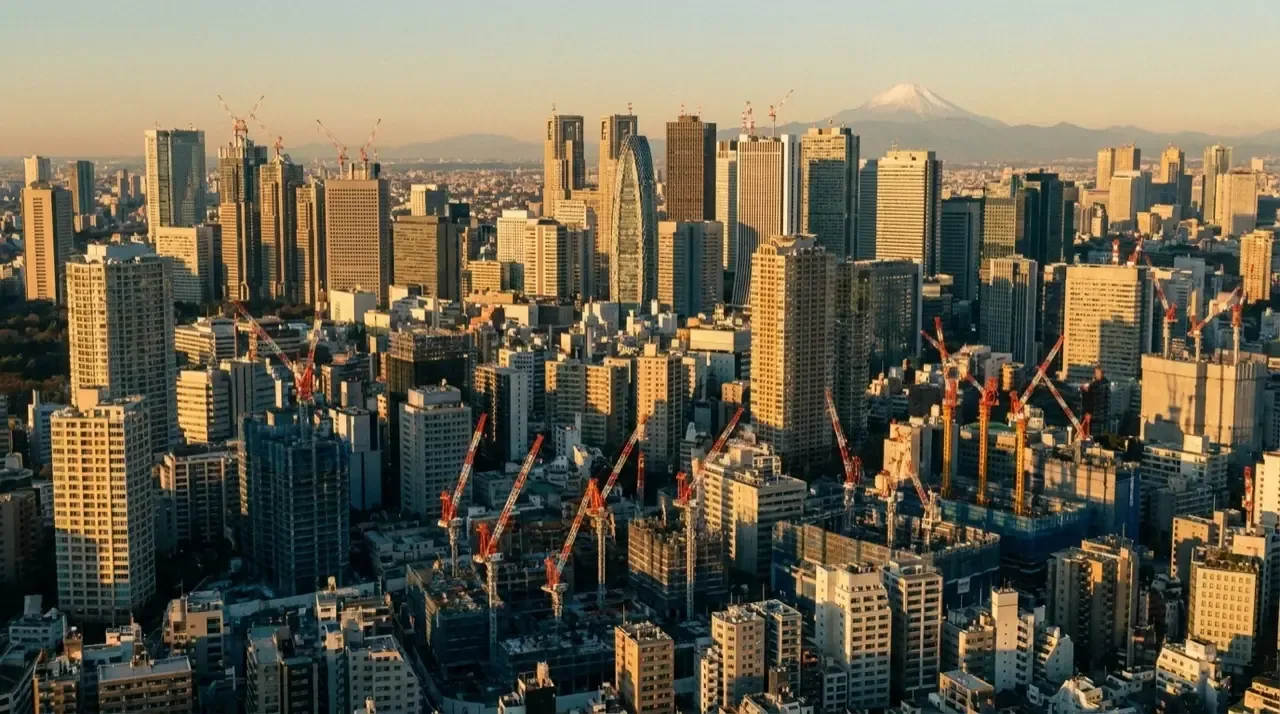
Most foreigners know Shinjuku as the chaotic station they pass through, or the neon of Kabukicho on the east side. Nishi-Shinjuku (“West Shinjuku”) is the other side: the cluster of office towers around the Tokyo Metropolitan Government Building. It was Tokyo’s original high-rise district. The Keio Plaza Hotel went up in 1971, the Sumitomo Building in 1974, and the Metropolitan Government moved in by 1991.
That history is exactly the point. Those towers are now 50-plus years old. A district that was cutting-edge in the Showa era is aging out, and the planners have decided not to patch it but to rebuild it. That gives a buyer something rare in central Tokyo: a clear, funded, multi-decade redevelopment story you can position in front of, rather than chase after prices have already moved (as they largely have in Azabudai and Toranomon).
From the desk — Nishi-Shinjuku is one of the few central pitches where I have to keep reminding buyers that the catalyst is a decade of cranes, not a closing date. Over the years the clients who lose patience here are the ones who quietly wanted a flip; the ones who treat the messy, slipping build-out as the price of getting in before the trophy districts already moved are the ones who actually hold long enough to be rewarded.
The anchor: Shinjuku Station West Exit tower
The headline project sits directly over the West exit, on the cleared site of the old Odakyu Department Store. It is a roughly 260m, 48-story tower being built by Odakyu, Tokyo Metro and Tokyu Land. Construction began in March 2024, with completion targeted around the end of FY2029 (so 2029-2030; directional, as of writing).
The numbers are big: about 279,000 square meters of floor space, offices on floors 14-46, one of the largest commercial complexes in the Shinjuku area on the lower floors, and observation/view facilities up top. As important as the tower itself, the West plaza is being converted from a car-dominated roundabout into a pedestrian space, with the spiral parking ramp moved away from the station in early 2025 and traffic lanes reorganized through late 2025.
Honest caveat: not everything is on schedule. The separate South-area piece led by Keio was, as of early 2025, not yet started, with its original FY2028 completion now undecided. “Shinjuku is being rebuilt” is true; “all of it finishes by 2030” is not.
The residential play: Nishi-Shinjuku 3-chome
For a buyer, the more interesting project may be 3-chome, southwest of the station near the Park Hyatt and Shinjuku Park Tower. The plan calls for two 65-story, roughly 235m residential towers on a 4.8-hectare site, around 3,200 apartments, with retail below and a total floor area near 385,000 square meters. It is backed by a heavyweight group including Nomura Real Estate, Tokyo Tatemono and Sumitomo Corporation.
This matters because pure new-build supply of this scale in a core ward is unusual. A few thousand new units arriving over the back half of this decade gives the area fresh, modern, foreigner-friendly stock — the kind of building (English-capable management, new earthquake standards, concierge) that overseas buyers actually want. Timeline here has slipped repeatedly across a project first floated in the 1990s, so treat any single completion date as directional and verify the current schedule before you commit.
The big frame: Shinjuku Grand Terminal
Behind both projects is the Tokyo Metropolitan Government’s “Shinjuku Grand Terminal” concept, formulated in 2018, to reorganize the area immediately around the world’s busiest station. Construction-phase work began around 2021. The plan aims to roughly complete the core by the mid-2030s and fully finish out toward the 2040s.
What that means in plain terms: the east-west divide that has always split Shinjuku — you currently have to walk a long way around — is being stitched together with new pedestrian decks and a redesigned station. For a property owner, easier, nicer movement through the station is the kind of slow, structural improvement that supports rents and resale for decades, not just through one opening.
What it costs and earns
Citywide, central-six-ward used-condo asking prices hit records in 2025, around 160 million yen per 70 sqm (roughly 2.3 million yen/sqm; directional, as of writing), with central-ward land prices up double digits on the commercial side. Shinjuku has been one of the stronger appreciation stories. On yield, set expectations honestly: central Tokyo residential gross yields typically run about 3-4%, and Nishi-Shinjuku is no exception. You are not buying this for fat cash flow. You are buying for a low-vacancy, high-liquidity asset with a genuine redevelopment catalyst, in yen that is still historically cheap for dollar, euro, Taiwan dollar and Singapore dollar buyers. Foreign demand in core Tokyo has been heavy — Taiwanese buyers alone were reported around 60% of foreign condo purchasers in the core in 2025.
Rent is collected in yen. If the yen strengthens, your home-currency return falls even if the building does fine. Run the numbers yourself before you fall in love with a floor plan.
Against the other central redevelopment plays: Azabudai / Toranomon (Minato) is largely built and priced in — you pay top-of-market today for a finished product. Shibuya is also being rebuilt around its station, more youth/retail-driven, tighter supply, premium pricing. Nishi-Shinjuku’s edge is timing and price: you are earlier in the curve, paying less per sqm than the Minato trophies, in a ward with deep rental demand from offices and the Metropolitan Government. Practical moves: (1) decide between existing towers (immediate income, lower price) and pre-sale units in the new 3-chome stock (modern, foreigner-friendly, longer wait); (2) verify the current schedule on whichever project sits nearest your target building, since dates here slip; (3) model your return in your home currency, not just yen. Line it up against Minato and Shibuya in the compare view.
Related reading: The Earthquake Fear Is Priced for 1923 — Tokyo Is Built for 2026.
Related reading: The Land Underneath Is Compounding: How Tokyo’s Skyline Rebuild Quietly Reprices Central Ground.
What are the best stations in Shinjuku Ward for rental investment?
Ranked by yield-to-access balance:
- Iidabashi (Kagurazaka) — best overall combination of supply constraint, tenant quality, and transport.
- Yotsuya (Yotsuya, Akebonobashi area) — reliable income, low vacancy, institutional neighbor effect.
- Shinjuku-Gyoemmae — park premium, good access, underpriced relative to Kagurazaka.
- Ichigaya (Ichigaya Station, JR and subway) — highest yield per sqm in the ward, functional not glamorous.
- Okubo / Hyakunincho — lowest prices, foreign resident concentration (Korean, Chinese, Southeast Asian communities), higher yield but also higher management complexity and stigma risk with domestic buyers on exit.
- Nishi-Shinjuku / Tochomae — the “buy before it finishes” play: mid-cycle redevelopment, prices below the trophy zones, practical office/transport rental demand. A hold, not a flip.
Where this goes wrong
Conflating “Shinjuku” with investment quality. “My property is in Shinjuku Ward” tells you almost nothing. Kabukicho and Kagurazaka are both Shinjuku Ward and are completely different investment propositions.
Buying near Okubo for yield without understanding exit risk. Okubo has real demand from Tokyo’s ethnic minority communities and transient international workers. Yields can hit 5%+. But selling an Okubo apartment to a Japanese domestic buyer requires accepting a discount. Know your exit plan before you enter.
Old building risk in Shinjuku. Parts of Shinjuku Ward still have pre-1981 stock. 1960s–70s apartment buildings can look like bargains. They’re often bargains for a reason — structural compliance questions, deferred maintenance, and financing difficulty on resale.
Underestimating Shinjuku-Gyoen pricing competition. The park-adjacent premium is genuine but thin on supply. When a park-view unit comes available, it trades fast and above estimates. Don’t anchor to asking price as a ceiling.
FAQ
Is Kagurazaka popular with French expats specifically? Yes, measurably so. The French School proximity and a multi-generational French culinary presence means French tenants specifically seek Kagurazaka addresses. Real estate agents with French-speaking staff operate here. The tenant quality — dual-income professional households on company leases — is excellent.
How has the Kabukicho Tower development changed the area? Marginally. The Tower brought higher-end food and beverage options and some boutique residential. The fundamental entertainment district character surrounding it hasn’t changed. The nightlife economy precedes and will outlast any single tower.
What are rents in Kagurazaka for a 2LDK? A well-maintained 2LDK (60–75 sqm) in a post-2000 building in Kagurazaka commands roughly ¥220,000–¥320,000/month depending on floor, view, and renovation status.
Are there any redevelopment plans affecting Shinjuku Ward? The Shinjuku Station redevelopment is ongoing — the roughly 260m West exit tower (construction began March 2024, completion targeted around the end of FY2029), the south exit area, and the pedestrian deck connections under the Shinjuku Grand Terminal plan running to the 2040s. Long-term this improves ward infrastructure. Kagurazaka and Yotsuya are far enough to be unaffected by construction noise.
Can I get a mortgage in Japan as a non-resident for a Shinjuku Ward property? The same constraints apply as across Tokyo — Japanese banks favor residents with Japanese income. Non-residents can explore offshore financing or specific lenders like SBI Shinsei Bank, which has historically taken non-resident applications. Conditions change; verify current offerings with a mortgage broker who specializes in foreign buyers.
A separate piece puts all five central wards side by side — price per sqm, yield, and liquidity ranked in a single comparison table.