STRATEGY & YIELD
Modeling a Kyoto Machiya STR: ADR, Occupancy, and the 180-Day Ceiling
A Kyoto machiya (traditional townhouse) looks like the perfect Airbnb. But municipal restrictions cap operating days far below 180.
On this page 7
TL;DR: Kyoto machiya — traditional wooden townhouses — generate genuine premium ADR because international guests pay for authenticity. But Kyoto city’s minpaku ordinance restricts standard residential zone operation to roughly 60 days per year (mid-January to mid-March). Outside that window, you need a hotel/ryokan license or a property in a commercial zone. Renovation costs for a habitable machiya run ¥5–20 million. The math can work, but only in specific zone-license combinations. Most “I’ll buy a machiya for Airbnb” plans collapse on the zoning reality.
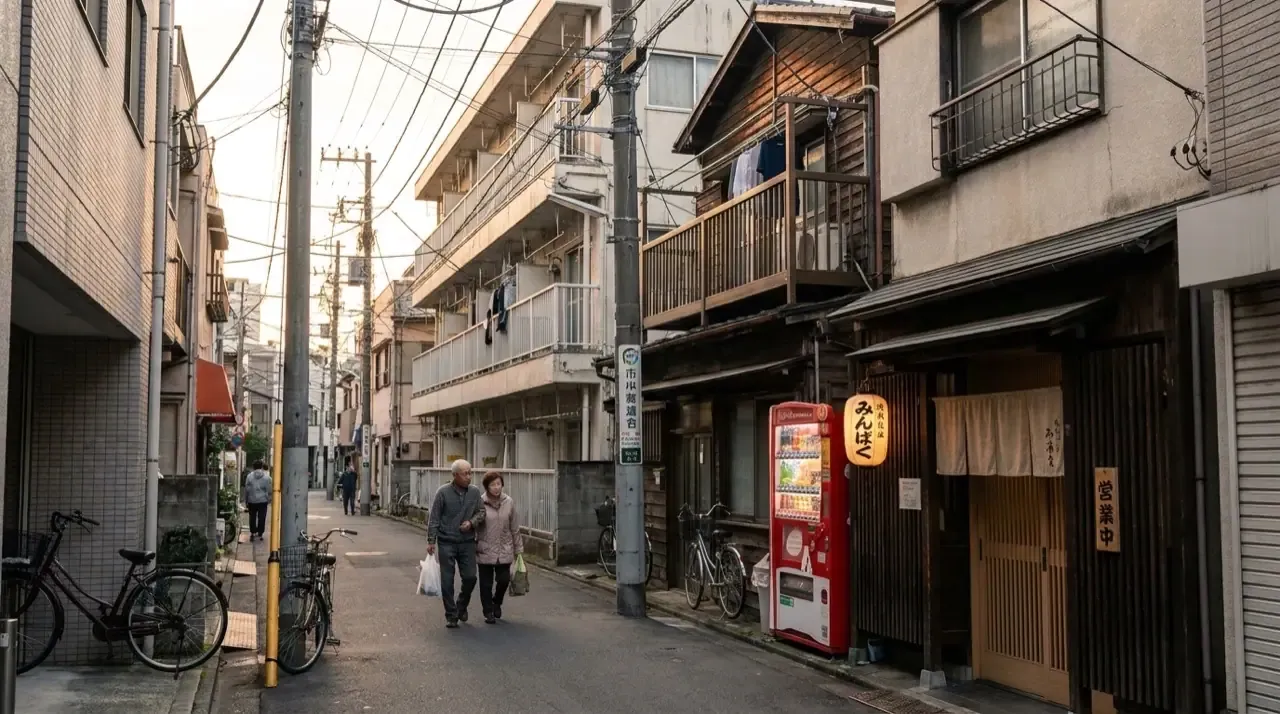
A Kyoto broker showed me a machiya in Nishijin last autumn. Hundred-year-old lattice facade, interior garden, two rooms with traditional sliding screens. Asking price ¥28 million. She mentioned casually that the previous buyer had backed out. When I asked why, she said it was a minpaku problem. He’d modeled ¥180,000/month in Airbnb revenue. The zoning allowed 60 operating days per year. He’d done the arithmetic and walked.
That broker was doing him a favour. Not everyone is that lucky.
What Kyoto’s Minpaku Ordinance Actually Says
Kyoto City passed its minpaku ordinance in January 2018, before the national minpaku law even came into force. It’s one of the most restrictive in Japan.
In low-rise exclusive residential zones and Category 1 residential zones — which covers most of Kyoto’s traditional neighbourhood fabric — minpaku under the standard notification pathway is permitted only from January 15 to March 16. That’s approximately 60 days per year.
In commercial zones and neighborhood commercial zones, the national 180-day limit applies. These zones exist, but they’re not where most machiya are.
If you want year-round operation in a residential zone machiya, you need a hotel/ryokan simple lodging license. That changes the renovation scope entirely.
From the desk — Every season I sit across from someone who has fallen in love with a machiya facade and modeled it on a full year of nights, and the conversation I keep having to start is the one about which residential zone caps them near sixty days. The buyers who hesitate at that reveal are the ones I worry least about; it’s the ones who wave the zoning away as a formality who tend to overpay.
Machiya Renovation Costs: The Real Starting Point
Machiya vary from structurally sound buildings requiring cosmetic work to condemned wooden structures that need full rebuilding. General framework for a purchase-and-renovate scenario:
Category A: Good structural condition, interior update only
- Rough renovation: ¥3–7 million
- Fire safety to hotel/ryokan standard: ¥500,000–¥1,200,000
- Total all-in renovated cost: ¥30–37M on a ¥25–28M purchase
Category B: Moderate condition, partial structural work
- Rough renovation: ¥8–15 million
- Fire safety: ¥1,000,000–¥2,000,000
- Total: ¥35–50M on similar purchase
Category C: Poor condition (common in Kyoto’s abandoned machiya stock)
- Full renovation or rebuild: ¥15–25 million+
- Sometimes structurally easier to demolish and rebuild, losing the historic character that justified the premium in the first place
The renovation cost changes everything. A ¥28M machiya that costs ¥12M to renovate is a ¥40M asset. Your yield calculation starts from ¥40M.
The Pro Forma: Commercial Zone (180 Days)
Figures below are illustrative — representative of a well-managed machiya in a commercial zone, not a specific property or guaranteed outcome.
This scenario assumes the machiya is in a commercial zone or you’ve obtained a hotel/ryokan simple lodging license. Modeled as a 2-room (4-guest) machiya with traditional design maintained.
Revenue assumptions:
- ADR: ¥45,000/night (machiya premium is real; comparable properties on Airbnb Kyoto run roughly ¥35,000–¥60,000 for authentic units, as of writing)
- Available nights: 180 (commercial zone or hotel license)
- Target occupancy: 72%
- Occupied nights: 130
- Gross revenue: ¥5,850,000/year (roughly $39,000 at 150 JPY — illustrative)
Expense assumptions:
- OTA commission (15%): ¥877,500
- Cleaning cost (¥15,000/turn × 130 turns): ¥1,950,000
- Management company (20% of gross, remote host): ¥1,170,000
- Utilities: ¥360,000
- Insurance: ¥120,000
- Maintenance/repair reserve: ¥200,000
- Total expenses: ¥4,677,500
Net operating income: ¥1,172,500/year (roughly $7,817)
On a total investment of ¥40M, that’s a 2.9% net yield. Before mortgage, depreciation, or tax.
Pushing to 80% occupancy adds roughly 14 nights: ¥630,000 gross, ¥470,000 net after OTA and cleaning. NOI becomes ¥1,642,500 — a 4.1% net yield. Better. Still not exceptional for an illiquid, management-intensive asset.
The machiya case depends on appreciation. Kyoto’s premium machiya stock is finite, and prices for quality vacant buildings have risen steadily. But appreciation isn’t income, and foreign investors who need yield to service acquisition costs should model conservatively.
Related reading: RevPAR for Minpaku: The One Metric That Beats Occupancy and ADR Alone.
Related reading: ADR Benchmarks by Tokyo Neighborhood for 2026.
Related reading: The Pillow Shortage: Why 60 Million Tourists Can’t Find a Bed (And You Can Own One).
The Pro Forma: Residential Zone (60 Days)
Now the hard scenario. Residential zone, minpaku notification only.
Revenue assumptions:
- ADR: ¥45,000 (same unit, same quality)
- Available nights: 60
- Occupancy: 80% (high-demand January–March window)
- Occupied nights: 48
- Gross revenue: ¥2,160,000/year (roughly $14,400)
Expenses (same structure, scaled to volume):
- OTA commission: ¥324,000
- Cleaning (¥15,000 × 48 turns): ¥720,000
- Management company: ¥432,000
- Utilities: ¥360,000 (fixed regardless of occupancy)
- Insurance: ¥120,000
- Maintenance reserve: ¥200,000
- Total: ¥2,156,000
Net operating income: ¥4,000/year
Nearly break-even on operations. Mortgage, tax, and depreciation not included. The residential zone machiya as a minpaku isn’t an investment — it’s an expensive hobby.
Some operators use the 60 available days under minpaku and rent the property long-term for the remaining 10+ months. A furnished monthly rental might achieve ¥150,000–¥250,000/month in a desirable Kyoto neighbourhood. That changes the math. The blended model — minpaku in peak season, monthly rental otherwise — deserves its own modelling and its own legal structure.
What the ADR Premium Actually Requires to Maintain
The ¥45,000 ADR assumption isn’t free. Guests paying that rate expect:
- Authentic interior — original materials, tatami, traditional sliding screens, exposed beam ceilings maintained
- Professional photography, not phone snaps
- Reliable check-in that doesn’t involve a 90-minute key box hunt in a Nishijin alley
- Japanese bathing culture elements (proper soaking tub, not just a shower stall)
- Interior that photographs as well as it performs
Every renovation decision that cuts cost by cheapening the aesthetic also cuts ADR. The temptation to save ¥2M on interior work and end up with a unit that prices at ¥30,000 instead of ¥45,000 is real and mathematically damaging.
Where This Goes Wrong
- Buying in a residential zone assuming you can obtain a hotel/ryokan license. The structural requirements may make your machiya ineligible without effectively rebuilding.
- Underestimating renovation timelines. Kyoto’s building permit office for heritage structures moves slowly. A 12–18 month renovation-to-open timeline is not unusual.
- Ignoring earthquake risk. Older machiya may not meet current seismic standards. Bringing them up to code adds cost and sometimes isn’t feasible without rebuilding load-bearing elements.
- Not accounting for neighbor dynamics. Machiya are typically standalone buildings (no HOA), which is an advantage. But if the property shares walls with neighbours, noise complaints can trigger problems with the city.
- Projecting Tokyo-level management company availability in Kyoto. The remote management infrastructure is thinner. Good Kyoto-based minpaku managers are in demand and their fees reflect it.
FAQ
Are there any machiya-specific financing programs for foreign buyers? Some regional banks in Kyoto Prefecture have machiya preservation loans at subsidized rates, but these are generally available to Japanese residents. Foreign nationals typically finance through conventional bank loans or equity. Loan-to-value ratios for older wooden structures are conservative.
Does the city of Kyoto offer any renovation subsidies for machiya? Yes. Kyoto City has machiya preservation subsidy programs. They’re modest (typically ¥500,000–¥2M depending on the project scope) and come with restrictions on how the property can be used. STR use may disqualify you from some programs. Check with the city office before applying.
Can I use the machiya personally and also rent it on Airbnb? Under the standard minpaku notification, personal-use periods count against your cap only if guests are present. You can use the property yourself outside the designated booking windows without affecting your cap. Under a hotel/ryokan license, you cannot use the property as a personal residence — it’s a lodging business.
What’s the typical Airbnb review score for well-run machiya? Premium machiya with authentic interiors and professional management consistently run 4.8–4.9 on Airbnb. The experience is differentiated enough that guests forgive minor inconveniences. That review score supports premium pricing and search ranking.
Is the machiya market getting more or less competitive? More. The number of licensed STR operators in Kyoto’s commercial zones has grown. Simultaneously, the available machiya stock in good condition is declining. Prices are rising for quality stock. Acquisition timing matters more than it did five years ago.